

Revelation and Prayer Heschels Meeting
Couldn't load pickup availability
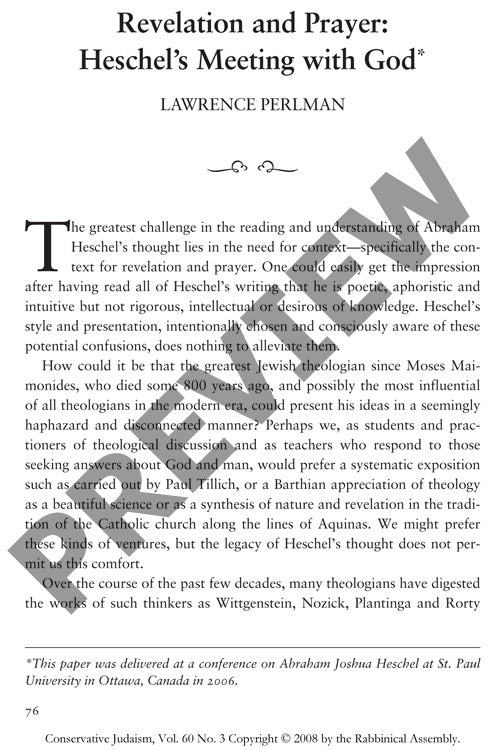
Prayer and revelation form an inseparable dyad in Abraham Joshua Heschel's theological framework, yet scholars have struggled to systematize his deceptively complex thought. Through phenomenological analysis of Heschel's major works, particularly *God in Search of Man* and *Man's Quest for God*, a distinctive theological vision emerges: God transcends both symbolic representation and metaphysical construction, with revelation manifesting as an experiential reality demanding human response. Drawing on Husserl's influence, Heschel's phenomenological approach creates a delicate balance between divine encounter and human participation. Prayer emerges as the essential human counterpart to divine revelation - a transitive, non-symbolic movement between words and silence that enables authentic meeting with God. Unlike symbolic theological approaches that reduce divine encounter to metaphorical expression, Heschel positions prayer as ontologically necessary for full humanity, emphasizing self-restraint over self-expression and *kavanah* (intentionality) over ceremonialism. The research demonstrates that revelation without prayer remains fruitless, while prayer without revelation becomes barren. This analysis illuminates Heschel's unique contribution to modern theology while offering important correctives to contemporary interpretations that overemphasize symbolic or metaphysical readings of his thought.
More Information
-
Physical Description
-
Publication Information
Published
ISBN
-
Publication Credits
Lawrence Perlman